Product Introduction:
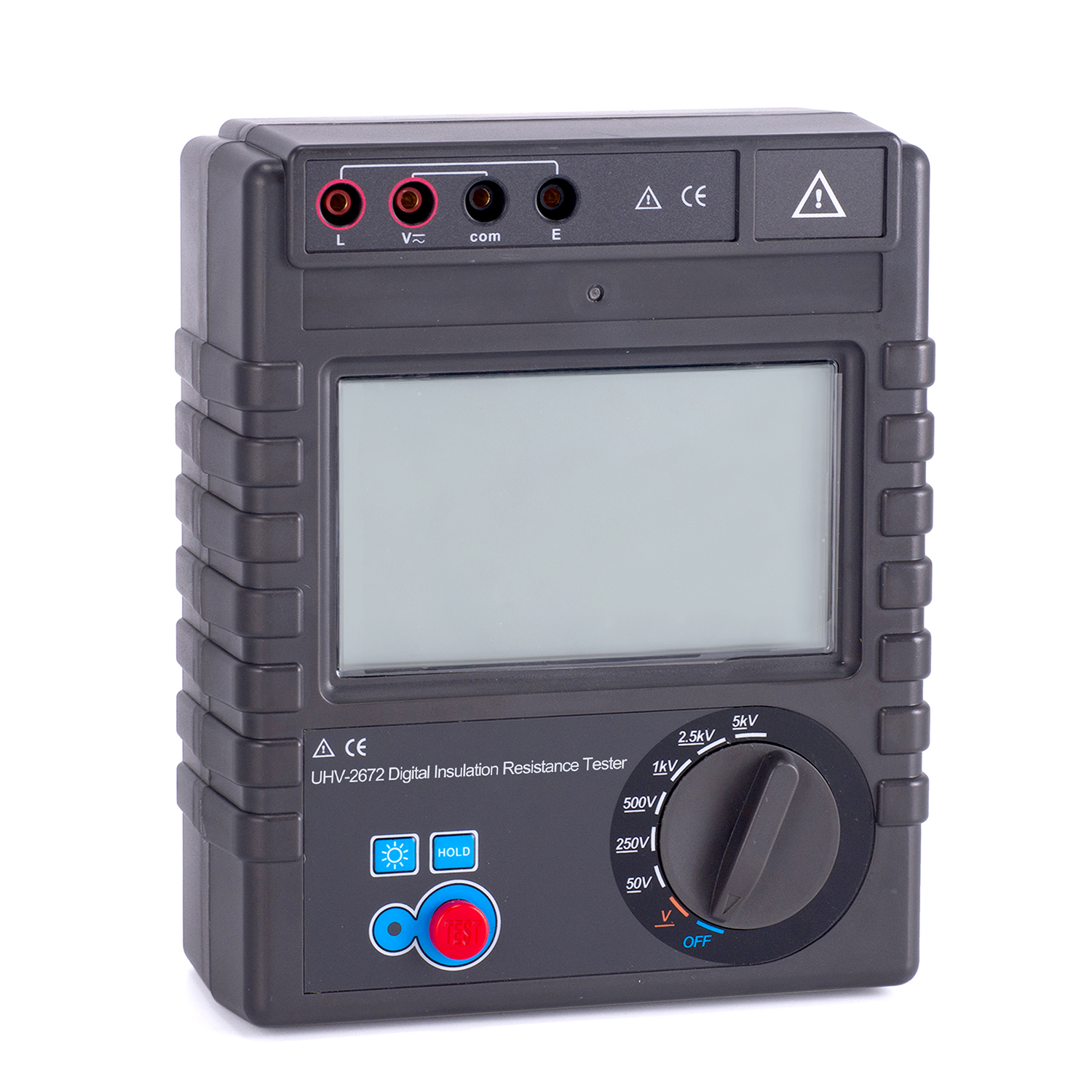
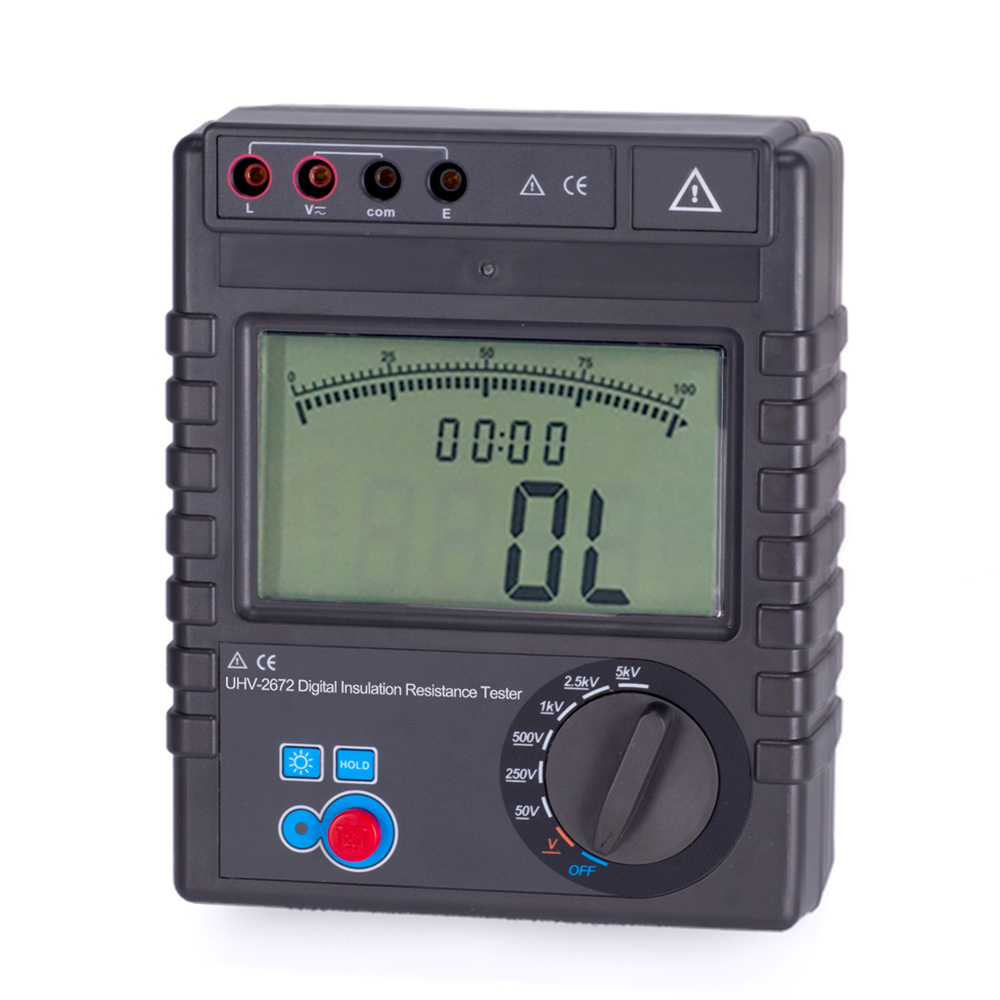
The digital megohmmeter produced by Wuhan UHV is designed using medium- and large-scale integrated circuits. This meter features high output power, a high short-circuit current, and multiple output voltage levels (four voltage grades are available).
Its operating principle is as follows: the DC high voltage generated by the internal battery through DC/DC conversion is applied from the E terminal to the L terminal via the device under test, thereby generating a current flowing from the E terminal to the L terminal. After I/V conversion and division operations, the measured insulation resistance value is displayed directly on the LCD screen.
 |  |
Key Features:
1、High Power Output with robust short-circuit current capability
2、 Four Selectable Voltage Ranges for versatile testing applications
3、Battery-Powered DC/DC Conversion system generating precise test voltages
4、Intelligent Measurement Circuitry featuring:
I/V conversion technology
Precision voltage division
Direct LCD resistance readout
Measurement Principle:
The instrument generates DC high voltage from internal batteries, applying this potential between the E (earth) and L (line) terminals. Current flow through the test specimen is converted and processed to display accurate insulation resistance values on the digital display.
Technical Advantages:
✓ High measurement accuracy
✓ Multiple voltage range selection
✓ Reliable battery operation
✓ Clear digital readout
Product Features
1、High-Performance Design
Features robust output power with exceptional load capacity
High-strength aluminum alloy casing for durability
Advanced anti-interference technology ensures measurement accuracy
Output short-circuit current >1.6mA enables rapid voltage stabilization
Proportional circuit design maintains precision even in low-resistance measurements
2、Smart Operation System
Battery-powered operation eliminates manual power generation
Automatic range switching for seamless measurement
Intuitive panel interface with clear LCD display
Streamlined workflow for efficient testing
3、Precision Measurement Capability
Direct measurement of output short-circuit current
Eliminates estimation requirements for improved accuracy
Optimized for both high and low resistance testing
Technical parameter
| Arbeitsbedingungen | environment temperature:0℃~+45℃ |
| relative humidity:≤85% | |
| Ausgangsspannungspegel | 500V,1000V,2500V,5000V |
| Messbereich | 0~19990MΩ |
| Auflösung | 0.01MΩ,0.1MΩ,1.0MΩ,10.0MΩ |
| relativer Fehler | 0~2000MΩ≤±5%±2d 2000MΩ~19990MΩ≤10%±2d |
| Spannung/Last | 5000V/40MΩ |
| Spannungsabfall | ungefähr 10% |
| Kurzschlussspannung | >1.6mA |
| Gleichstrom | 8×1.5V(AA,R6)battery |
| Wechselstrom | 220V/50Hz |
| Leistung | quiescent dissipation≤160mW;maximum power≤2.5W |
| Volumen | 235×200×135mm3 |
| Gewicht | <1.4kg |
Application Scenarios
Transformer insulation testing
Used for testing the insulation resistance between transformer windings and ground, as well as between windings. Commonly used for insulation condition checks during transformer installation, maintenance, and pre-commissioning.
Motor insulation testing
Used for testing the insulation performance of motor windings. Applicable to routine maintenance, fault diagnosis, and post-repair testing of high-voltage motors, industrial motors, and other equipment.
Power cable insulation testing
Used for checking the insulation condition of power cables. Suitable for insulation performance checks after cable installation, before commissioning, and after maintenance.
High and low voltage switchgear and distribution equipment testing
Used for testing phase-to-phase and phase-to-ground insulation of switchgear, distribution cabinets, and other equipment, helping to determine whether equipment has issues such as moisture, aging, or degraded insulation performance.
Power plant and substation equipment maintenance
Used for preventive maintenance and testing of electrical equipment such as transformers, motors, cables, and switchgear in power plants and substations.
Industrial enterprise electrical equipment maintenance
Applicable to industries such as steel, chemical, cement, and mining. Used for periodic insulation testing of motors, distribution cabinets, cables, and other electrical equipment, reducing downtime risks caused by insulation failures.
Electrical engineering installation and acceptance
Used for post-installation insulation testing of cables, distribution equipment, and electrical circuits in new factories, buildings, and power engineering projects, providing test data for equipment energization and project acceptance.
New energy power plant operation and maintenance
Can be used for insulation condition checks on electrical lines, cables, and related electrical equipment in photovoltaic, wind power, and other new energy projects. Suitable for on-site inspections and preventive maintenance.
Frequently Asked Questions
Q: What is the insulation resistance tester mainly used for?
A: The insulation resistance tester is mainly used for measuring the insulation resistance of electrical equipment and electrical circuits. It can detect the insulation performance between equipment and ground, as well as between phases, helping to determine whether there is insulation aging, moisture, contamination, or other abnormalities.
Q: What electrical equipment can the insulation resistance tester test?
A: The insulation resistance tester can be used for insulation resistance testing of transformers, motors, generators, power cables, high and low voltage switchgear, distribution cabinets, and other electrical equipment.
Q: Can the insulation resistance tester be used for transformer insulation testing?
A: Yes. It can be used for testing the insulation resistance of transformer windings and related insulation parts. It is suitable for insulation condition checks during transformer installation, maintenance, and before commissioning.
Q: Is insulation resistance testing the same as withstand voltage testing?
A: No. Insulation resistance testing is mainly used to measure the resistance value of insulating materials to determine insulation performance, while withstand voltage testing is primarily used to verify the ability of the insulation system to withstand a specified test voltage. They are different types of electrical tests and are often used together to complement each other.