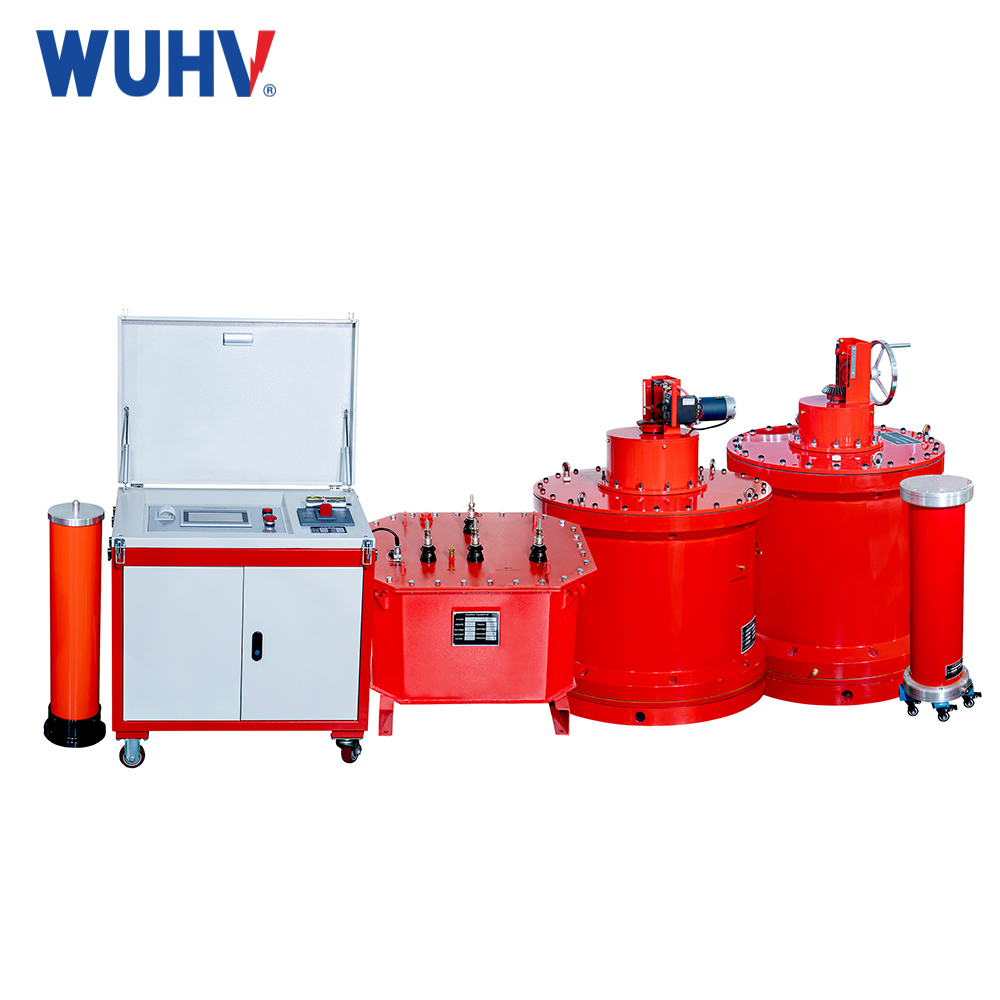
At the substation maintenance site, many power testers have faced the same problem: which one should they bring with them - the circuit breaker analyzer and the contact resistance tester? Or do we have to bring both? The answer to this question depends on your actual needs for the depth of diagnosis of the health status of the circuit breaker.
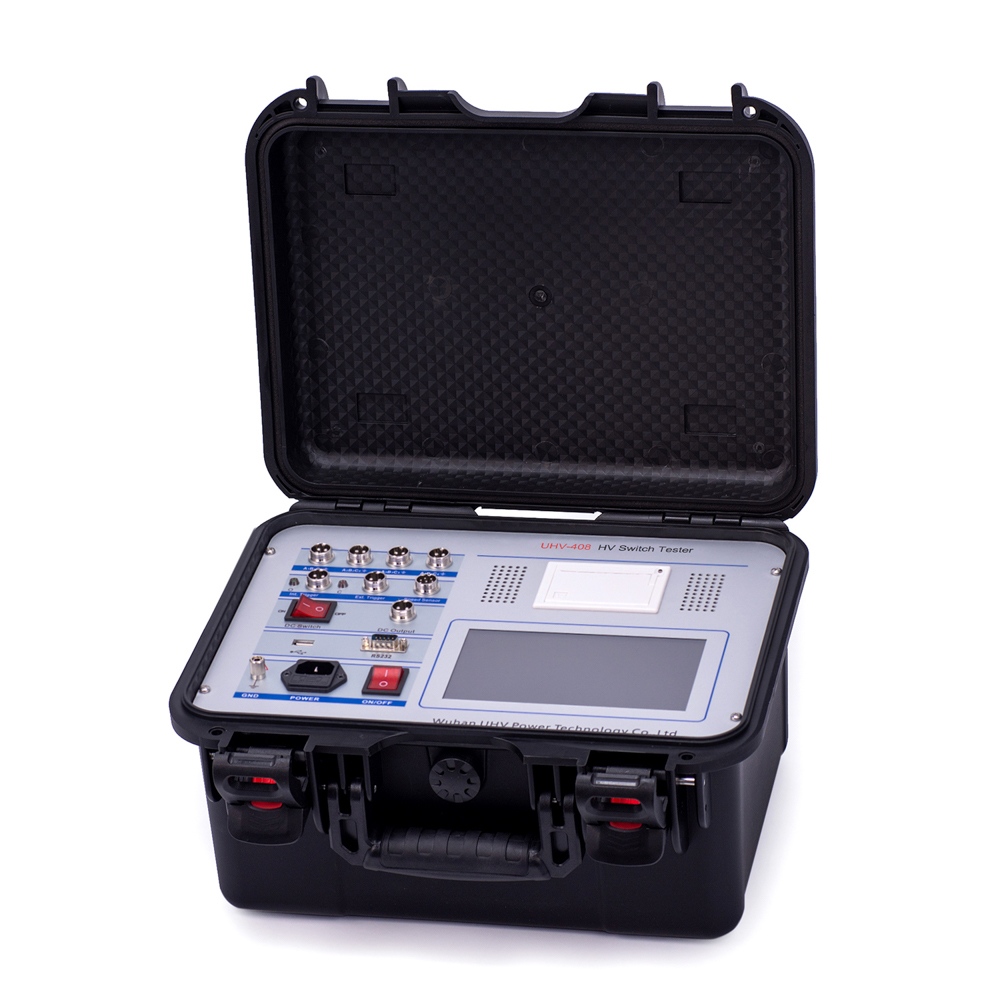
Dercircuit breaker analyzer is essentially a mechanical characteristic diagnostic system. Its core task is to capture the three-dimensional data of "time, speed, and travel" during the action of the circuit breaker. Taking the UHV-408 high-voltage switch characteristic tester of Wuhan UHV Power Technology Co., Ltd. as an example, the equipment can measure more than 20 mechanical parameters such as opening and closing time, different periods between phases, bounce time and frequency, rigid opening and closing speed, moving contact stroke, overtravel, etc., with a time measurement accuracy of ± 0.1 milliseconds. These data directly reflect the health status of the circuit breaker operating mechanism - whether the spring is fatigued, whether the connecting rod is worn, and whether the buffering is effective. The contact resistance tester, also known as the circuit resistance tester or high current micro ohmmeter, focuses on the static performance of the conductive circuit. It measures the contact resistance value of the main contact of the circuit breaker in the closed state by applying a constant current of not less than 100 amperes DC and using a four wire Kelvin connection method. This current level is a clear requirement of the national power industry standard - only a sufficiently large current can penetrate the oil film and oxide layer formed on the contact surface due to operational aging, and measure the true contact resistance.
The UHV-H200P high-precision circuit resistance tester from Wuhan UHV has a resolution of 0.01 micro ohms and can output four levels of test current between 50 and 200 amps. It can stably detect early defects such as contact erosion and contact pressure drop. From this perspective, the question answered by the contact resistance tester is "Can this contact reliably pass the rated current?" while the question answered by the circuit breaker analyzer is "Is the operating mechanism of this circuit breaker still flexible.
The diagnostic dimensions of the two do not overlap. A circuit breaker may have completely normal mechanical characteristics but severe contact erosion, or it may have a fault where the contact resistance is qualified but the opening time is severely exceeded. The traditional approach is to carry two independent instruments, wire them separately, test them separately, and record them separately, which increases the workload on site exponentially.
The dilemma of "running two devices on site" is being resolved by the new generation of integrated circuit breaker analyzers. Modern circuit breaker analyzers, represented by the Italian ISA CBA 3000, have built-in micro ohmmeter modules that can simultaneously perform mechanical characteristic analysis and static/dynamic contact resistance measurement. The UHV-406 intelligent high-voltage switch dynamic characteristic tester of Wuhan UHV also integrates full waveform sampling technology and AI trajectory tracking algorithm, which can complete a comprehensive evaluation from the opening and closing timing to the electrical state of the contacts after one wiring.
So, how should we balance in actual selection? If your daily work mainly focuses on routine testing of the mechanical characteristics of circuit breakers, and a dedicated circuit resistance tester is already equipped on site, then a high-precision circuit breaker analyzer is the core equipment. The UHV-408 of Wuhan UHV is mature and reliable in this position, with its flexible configuration of 12 channel fracture time channels, linear and rotary sensors, which can cover a wide range of needs from 10 kV vacuum switches to 1100 kV GIS composite electrical appliances.
If your maintenance scenario revolves around evaluating the contact status, such as frequent inspections of circuit breaker contact erosion or measurement of busbar joint contact resistance, a high stability high current micro ohmmeter is indispensable. The 0.01 micro ohm resolution and maximum test current output of 200 amps of UHV-H200P give it significant advantages in precise measurement of contact resistance. For teams that wish to use a single device to cover both mechanical and electrical performance diagnostics, an integrated circuit breaker analyzer is a more reasonable choice. It reduces the number of on-site wiring, avoids human errors caused by repeated disconnection of wiring, and also lowers the overall cost of equipment procurement and maintenance. As verified by industry practice, the circuit breaker analyzer can complete circuit resistance measurement on a single machine, and users do not need to purchase a separate contact resistance tester.
The final selection logic is not complicated: measure mechanical characteristics and choose an analyzer; Measure the conductivity of the contact and select a micro ohmmeter; Both need to be tested, choose an integrated solution. In today's increasingly compressed substation maintenance windows and streamlined personnel configuration, allowing one device to complete diagnostic tasks as much as possible is a pragmatic choice in itself.